
Paediatric Dentistry
In paediatric dentistry the real work begins before any treatment. How the first appointment goes shapes a child’s relationship with dentistry for the next twenty years. That is why we often do nothing at all on the first visit — we simply get acquainted.
"They fall out anyway" is not true
Baby teeth are not only for chewing; they hold space for the permanent teeth forming beneath. When a molar is lost early the neighbouring teeth drift into the gap and the permanent tooth has nowhere to erupt — which later presents as crowding.
So we fit space maintainers where teeth are lost early; we have seen many cases where a simple appliance reduced the orthodontic work needed later. Decay in a baby tooth is treated for the same reason: it hurts, it disrupts eating and it can affect the permanent tooth bud underneath.
Preventive measures
A fissure sealant is a flowable material placed in the deep grooves of the chewing surfaces of back teeth. It is painless, needs no anaesthetic, takes a few minutes, and closes off the site where decay most often starts. It is most effective applied as soon as the permanent molars erupt.
Fluoride varnish increases enamel resistance to acid attack and is repeated every six months. Neither is treatment — both exist so that treatment is not needed, and that is the most valuable part of paediatric dentistry.
The process
Chair, mirror and light are introduced; often nothing is done.
Decay, eruption sequence and bite are assessed.
Fissure sealants and fluoride varnish are applied.
Fillings, pulpotomy or space maintainers — in short visits.
Eruption monitoring and early orthodontic screening.
Related services
- Child protection package
- Paediatric examination
- Sealants & fluoride
- Pulpectomy of primary teeth
- Prefabricated / strip crowns
- Space maintainers — fixed / removable
A treatment plan and its costing are prepared individually after examination.
Common questions
When the first tooth appears, or by their first birthday at the latest. That appointment is usually not about treatment; it covers diet, bottle habits, brushing and fluoride. A child who meets the dentist early comes back without fear when something is wrong — that is the real gain.
Telling us in advance makes our job easier. With anxious children we give the whole first visit over to getting acquainted and leave treatment to the second or third. Please avoid promising "it won’t hurt" — once a child’s trust is lost it takes a long time to rebuild.
Yes. Left alone it causes pain and abscess, the child avoids chewing, and sleep and nutrition suffer. More importantly, infection at the root tip can damage the enamel of the permanent tooth developing underneath. Treated early it is usually a single-visit filling.
Around age seven. By then the permanent incisors and first molars are erupting, and jaw relationship and space shortage become visible. Early assessment does not always mean early treatment — in most cases we simply monitor. But for problems such as a crossbite, early intervention saves a great deal of work later.
Who performs this treatment
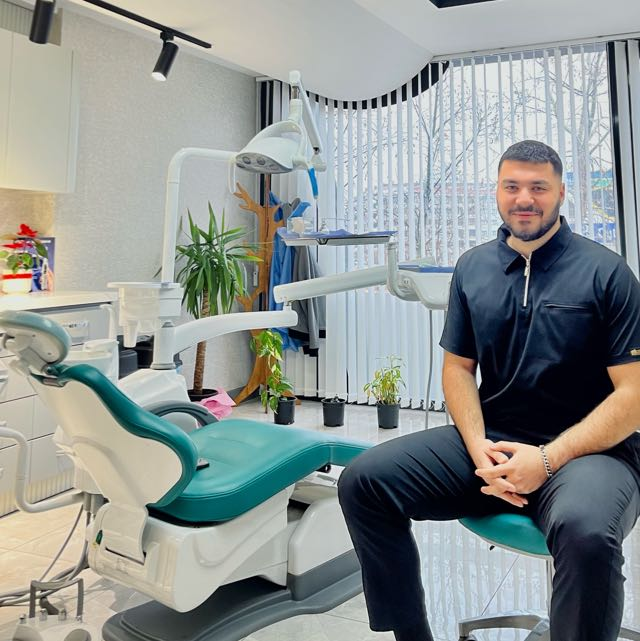
Dt. Han Demirci
Dentist · Aesthetic Dentistry & Implantology
- Digital smile design (DSD)
- Laminate veneers & zirconia
- Implantology
Dental Treatments
Root Canal Treatment
Saving a tooth when decay reaches the nerve — with rotary files and an apex locator, often in one visit.
More →Dental TreatmentsGum Treatments
Bleeding gums, recession and loose teeth: periodontal therapy, curettage, flap surgery and grafts.
More →Dental TreatmentsImpacted Teeth & Oral Surgery
Wisdom teeth, impacted teeth, cysts and abscesses — planned with CBCT imaging.
More →Dental TreatmentsDentures & Prosthetics
Full dentures, partials and precision-attachment solutions that seat properly and stay in place.
More →Reach us.
WhatsApp is fastest — during opening hours we usually reply within minutes.
- AddressIsırgan Sk, Akfen Apt, Kat 1, Daire 2, Belediye Blv, Gönyeli, Nicosia
- Phone0548 818 12 12
- Emailinfo@smilexpert.com.tr
- Opening hoursMonday – Saturday · 09:00 – 19:00