
Teeth Whitening
Whitening works by breaking down pigment molecules inside enamel and dentine, not by abrading the surface. Applied correctly it does not damage tooth structure; applied badly it causes sensitivity and gingival irritation. The difference lies in gel concentration and gum isolation.
Cause first, whitening second
Not every discolouration responds. Tea, coffee, tobacco and age-related yellowing do well. Tetracycline banding, fluorosis and a single dark tooth after root canal treatment need different approaches — whitening alone falls short there.
Which is why an examination comes first. Calculus and surface stain are cleaned off beforehand, and in some patients that cleaning alone delivers the change they wanted. Caries and leaking filling margins are restored before whitening, otherwise sensitivity is unavoidable.
In-office and home whitening
In-office whitening uses a high-concentration gel with the gums isolated behind a barrier; a session takes around 45–60 minutes and the result is visible the same day. We usually plan two sessions.
Home whitening means a low-concentration gel in custom-made trays — slower, more gradual, and better tolerated by sensitive teeth. Combining the two gives the most durable result.
The process
The cause of discolouration and suitability are assessed.
Calculus and surface stain are removed.
A gingival barrier is placed and the lips retracted.
Gel is applied in three cycles, 45–60 minutes in total.
No staining foods or tobacco for 48 hours.
Related services
- In-office whitening — one / two sessions
- In-office whitening — both arches
- Internal bleaching (single tooth)
- Whitening package
- Scaling
A treatment plan and its costing are prepared individually after examination.
Common questions
Under clinical supervision there is no loss of enamel; the gel breaks down pigment rather than abrading the surface. The risk lies with unsupervised products — high-concentration gels and one-size trays bought online can burn the gums and leave patchy results.
No. Whitening acts only on natural tooth structure; composite, porcelain and zirconia keep their shade. So if you have restorations at the front, the order matters: whiten first, let the shade settle, then renew the fillings to match.
One to three years on average. Habits largely set the figure: several coffees a day, tobacco and red wine bring the colour back quickly. A few nights of top-up gel in your custom trays once a year keeps the result going.
Some patients get transient cold sensitivity in the first 24–48 hours. A potassium nitrate gel and fluoride application reduce it markedly. For teeth that are already sensitive we shift the protocol towards home whitening — lower concentration, less sensitivity.
Who performs this treatment
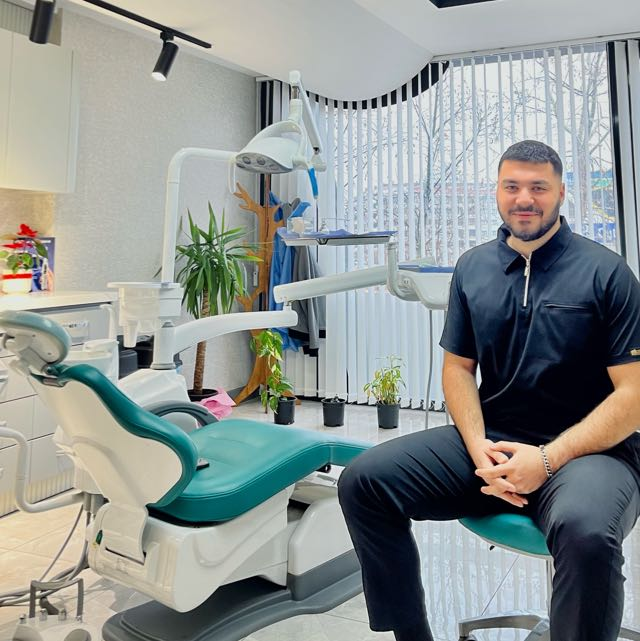
Dt. Han Demirci
Dentist · Aesthetic Dentistry & Implantology
- Digital smile design (DSD)
- Laminate veneers & zirconia
- Implantology
Dental Treatments
Clear Aligners
Straightening with invisible, removable aligners — taken out to eat and to brush.
More →Dental TreatmentsFixed Braces
Straightening with brackets and archwires — the most predictable method in complex cases.
More →Dental TreatmentsPaediatric Dentistry
From baby teeth to permanent ones: prevention, fissure sealants, space maintainers and a first visit without fear.
More →Dental TreatmentsRoot Canal Treatment
Saving a tooth when decay reaches the nerve — with rotary files and an apex locator, often in one visit.
More →Reach us.
WhatsApp is fastest — during opening hours we usually reply within minutes.
- AddressIsırgan Sk, Akfen Apt, Kat 1, Daire 2, Belediye Blv, Gönyeli, Nicosia
- Phone0548 818 12 12
- Emailinfo@smilexpert.com.tr
- Opening hoursMonday – Saturday · 09:00 – 19:00