
Dental Implants
An implant is a titanium fixture that replaces the root of a missing tooth. It integrates with the jawbone and, once a crown is placed on top, carries biting force without loading the neighbouring teeth. It remains the longest-lasting answer to a missing tooth.
Who it suits
A single missing tooth, several missing teeth at the back, and full edentulism are all situations where an implant is an option. In a single-tooth gap the main advantage is that the neighbouring teeth are left untouched: a bridge means cutting down two healthy teeth, while an implant solves the gap on its own.
What decides the case is bone, not age. If height and width are sufficient the procedure goes ahead directly; if not, volume is built up with a graft or sinus lift. Uncontrolled diabetes, heavy smoking and untreated gum disease all impair healing — these are corrected first, and the implant is planned afterwards.
How we work
Every implant case starts with a cone-beam CT. A panoramic film shows one plane; CBCT gives bone thickness, the position of the nerve canal and the sinus floor in three dimensions. The angle and depth of the fixture are decided from that data on screen.
A surgical guide is then produced — a template that seats in the mouth with the channel already drilled. Guided surgery shortens the procedure, keeps the incision small and puts the implant exactly where it was planned. In most single-tooth cases no sutures are needed at all.
The process
Bone volume, nerve and sinus positions are measured in 3D.
Position, angle and length are set on screen; the guide is produced.
20–40 minutes under local anaesthetic. You go home the same day.
About 3 months in the lower jaw, 4 in the upper.
A digital impression is taken and the crown is fitted.
Related services
- Implant planning package
- CBCT — region / single arch / both arches
- Bone graft & membrane
- Sinus lift
- Implant-supported crown
A treatment plan and its costing are prepared individually after examination.
Common questions
The procedure is done under local anaesthetic, so nothing is felt during it. Afterwards most patients describe mild pressure and swelling on the first day, and a standard painkiller is usually enough. Recovery tends to be more comfortable than an extraction, because the incision is smaller.
In most cases yes. Missing bone is rebuilt with graft material and a membrane, and in the posterior upper jaw the sinus floor is raised. These can be done in the same session as the implant or as a separate earlier stage — the CBCT shows which applies.
The titanium fixture can stay for decades provided oral hygiene is consistent. What wears is the crown on top, and that can be renewed when needed. The most common reason implants are lost is peri-implantitis, inflammation of the surrounding tissue — which is why six-monthly reviews matter.
In some cases yes — this is called immediate placement and it can cut months off the total timeline. If there is infection at the site or the bone walls are damaged, healing is allowed first. The decision is made from how the socket looks at the time of extraction.
Who performs this treatment
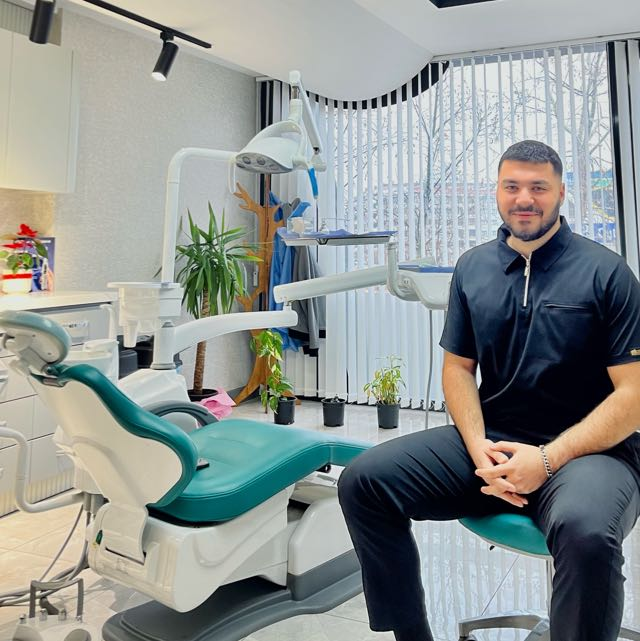
Dt. Han Demirci
Dentist · Aesthetic Dentistry & Implantology
- Digital smile design (DSD)
- Laminate veneers & zirconia
- Implantology
Dental Treatments
All-on-4 & All-on-6
A full arch on four or six implants with a fixed bridge. You leave the clinic with temporary teeth the same day.
More →Dental TreatmentsZirconia Crowns
Metal-free crowns that transmit light and take load. Strength at the back, natural appearance at the front.
More →Dental TreatmentsLaminate Veneers
Thin porcelain shells bonded to the front surface only. Minimal reduction, maximum aesthetics.
More →Dental TreatmentsE-max All-Ceramic
Lithium disilicate ceramic with the highest translucency — the first choice for matching a single front tooth.
More →Reach us.
WhatsApp is fastest — during opening hours we usually reply within minutes.
- AddressIsırgan Sk, Akfen Apt, Kat 1, Daire 2, Belediye Blv, Gönyeli, Nicosia
- Phone0548 818 12 12
- Emailinfo@smilexpert.com.tr
- Opening hoursMonday – Saturday · 09:00 – 19:00