
E-max All-Ceramic
E-max is the brand name for lithium disilicate glass ceramic. It comes closest to the way natural enamel refracts light, which is why it is chosen for the hardest job in aesthetic dentistry: matching one front tooth to its neighbours.
Why translucency matters
A natural tooth is not opaque: light enters through enamel, scatters in dentine and gives the tooth a sense of depth. An opaque restoration looks lifeless even when the shade is correct, because it bounces light off its surface.
E-max lets light in. That makes the difference on upper incisors, where the incisal edge should read as slightly translucent. For a single-unit restoration the difference is visible to the naked eye.
Where zirconia takes over
E-max has lower fracture resistance than zirconia. Under heavy posterior loading, in long-span bridges and in severe bruxism, zirconia is the safer material.
The decision follows the region: E-max on the anterior six, zirconia at the back is a combination we use often. Both materials can coexist in the same mouth, with shade matched through laboratory characterisation.
The process
The neighbouring teeth’s colour layers are photographed.
Minimal reduction, digital scan and a temporary.
Pressed, then characterised layer by layer.
Shade verified in daylight with try-in paste.
Adhesive cementation — E-max gains strength once bonded.
Related services
- E-max all-ceramic crown
- Ceramic veneer crown
- Ceramic laminate veneer
- Endocrown
A treatment plan and its costing are prepared individually after examination.
Common questions
It is the hardest case, and it is exactly what E-max exists for. The adjacent tooth’s colour layers, translucency and surface texture are documented photographically for the technician. At try-in it is checked in the mouth with try-in paste; if it does not match, it goes back. An extra try-in appointment is normal in these cases.
Once bonded it integrates with the tooth and is durable in normal function. Risk rises with heavy clenching and high posterior loads. Where bruxism is present we either switch to zirconia or plan it together with a night guard.
It can be, but with caution. A root-treated tooth is brittle and often darkened, and E-max’s translucency may not fully mask that darkness. In such cases an opaque substructure is used, or zirconia is chosen instead.
Yes, and the order matters. Natural teeth are whitened first, two weeks are allowed for the shade to stabilise, and only then is the ceramic made to that new shade. Done the other way round, the ceramic stays at the old shade and clashes with the whitened teeth.
Who performs this treatment
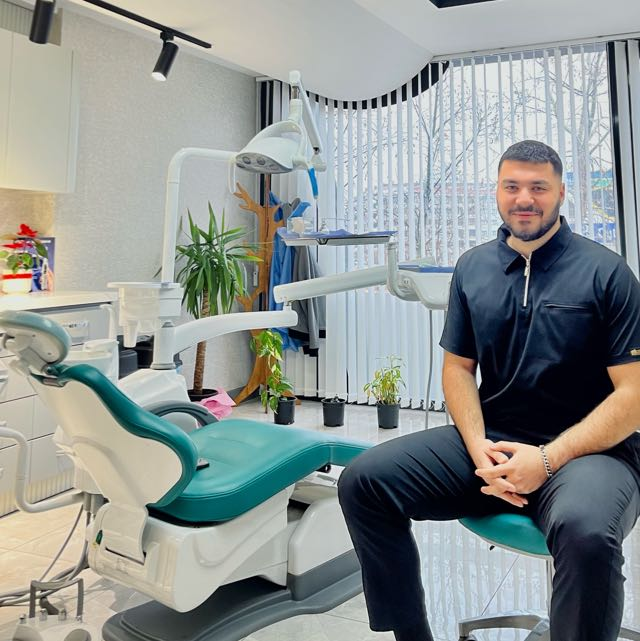
Dt. Han Demirci
Dentist · Aesthetic Dentistry & Implantology
- Digital smile design (DSD)
- Laminate veneers & zirconia
- Implantology
Dental Treatments
Digital Smile Design
See the result on screen, then in your own mouth. Nothing permanent starts until you approve it.
More →Dental TreatmentsTeeth Whitening
In-office whitening: several shades in one session, controlled, with no loss of enamel.
More →Dental TreatmentsClear Aligners
Straightening with invisible, removable aligners — taken out to eat and to brush.
More →Dental TreatmentsFixed Braces
Straightening with brackets and archwires — the most predictable method in complex cases.
More →Reach us.
WhatsApp is fastest — during opening hours we usually reply within minutes.
- AddressIsırgan Sk, Akfen Apt, Kat 1, Daire 2, Belediye Blv, Gönyeli, Nicosia
- Phone0548 818 12 12
- Emailinfo@smilexpert.com.tr
- Opening hoursMonday – Saturday · 09:00 – 19:00