
Zirconia Crowns
Zirconia is a ceramic that delivers both strength and translucency without a metal substructure. The grey line that appears at the gum margin with metal-backed crowns does not form here, and because light passes through, the crown is hard to tell from its neighbours.
Where it is used
Zirconia is the first choice for root-treated teeth at risk of fracture, molars with extensive loss of structure, discoloured front teeth and implant restorations. It is also used for bridges, comfortably carrying three- to four-unit spans.
It should not be confused with laminate veneers: a veneer covers only the front surface and needs minimal reduction, whereas a crown wraps the tooth completely. If the tooth has already lost a lot of structure, a crown is right; if it is sound but aesthetically compromised, a veneer makes more sense.
Digital fabrication
Impressions are taken with an intraoral scanner — no tray, no putty, no gag reflex. The scan goes to the laboratory immediately and the crown is milled from a single zirconia blank by CAD/CAM.
Shade is matched in daylight against the adjacent teeth. For a single anterior unit, photographs and characterisation notes go to the technician; matching one tooth to its neighbour is harder than making six, which is why the try-in stage is never skipped.
The process
The tooth is assessed and the shade chosen in daylight.
The tooth is reduced by 1–1.5 mm and digitally scanned.
A temporary is fitted the same day; no sensitivity.
Shade, form and occlusion are checked in the mouth.
The crown is bonded and the bite adjusted.
Related services
- Zirconia crown
- Implant crown
- Temporary crown
- Crown removal / repair / recementation
- Endocrown
A treatment plan and its costing are prepared individually after examination.
Common questions
E-max is more translucent, so it looks more natural on individual front teeth and veneers. Zirconia is stronger and is preferred at the back, for bridges and for patients who clench. Either works anteriorly; the decision comes down to how much of the underlying colour needs masking.
Not with zirconia. That grey shadow comes from a metal substructure; since zirconia has none, the margin stays close to the tooth’s own colour even if the gum recedes. Over the long term this is one of its clearest advantages.
The glazed surface picks up less stain than natural enamel, and tea, coffee or tobacco will not change the crown’s colour. Your own tooth structure at the margin can still discolour, so regular cleaning is still required.
On vital teeth, a few days of thermal sensitivity is normal and settles. If it lasts more than a week, or if biting hurts, the occlusion is checked — usually a few minutes of adjustment resolves it.
Who performs this treatment
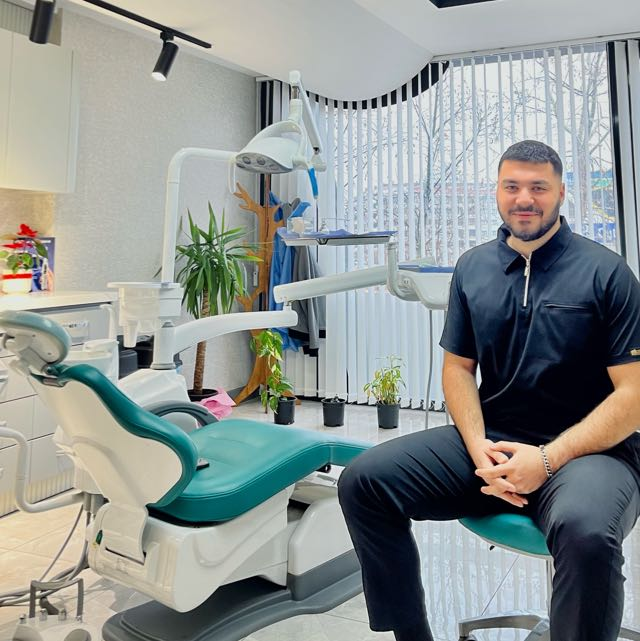
Dt. Han Demirci
Dentist · Aesthetic Dentistry & Implantology
- Digital smile design (DSD)
- Laminate veneers & zirconia
- Implantology
Dental Treatments
Laminate Veneers
Thin porcelain shells bonded to the front surface only. Minimal reduction, maximum aesthetics.
More →Dental TreatmentsE-max All-Ceramic
Lithium disilicate ceramic with the highest translucency — the first choice for matching a single front tooth.
More →Dental TreatmentsDigital Smile Design
See the result on screen, then in your own mouth. Nothing permanent starts until you approve it.
More →Dental TreatmentsTeeth Whitening
In-office whitening: several shades in one session, controlled, with no loss of enamel.
More →Reach us.
WhatsApp is fastest — during opening hours we usually reply within minutes.
- AddressIsırgan Sk, Akfen Apt, Kat 1, Daire 2, Belediye Blv, Gönyeli, Nicosia
- Phone0548 818 12 12
- Emailinfo@smilexpert.com.tr
- Opening hoursMonday – Saturday · 09:00 – 19:00